


How to Get a Job at a Startup (and don't burn out)
At iDelsoft, our advice for finding a startup job: match the work to your skills - and the workload to your limits. Set pay and schedule requirements before applying, reuse 2–3 strong work samples, and check what success looks like in the first 90 days.
Getting an offer is only part of the goal. I also want a job I can keep doing without burning out. Unclear expectations are questions to resolve - not promises to rely on.
🔎 Job Search Tip: What startup founders really want in interviews
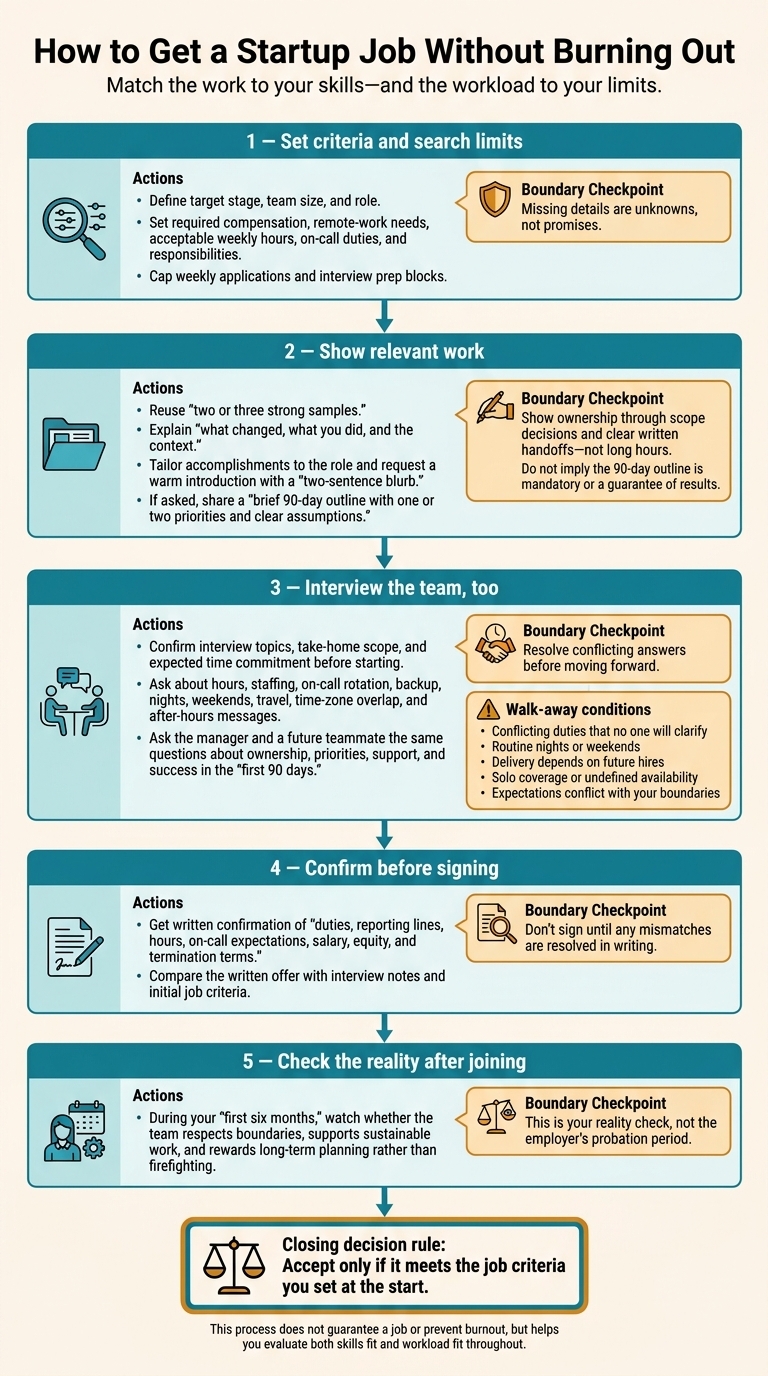
1. Set Your Job Criteria and Search Limits
Turn the risk checks above into search filters before you apply.
Choose Startups That Need Your Skills
Define your target stage, team size, and role. Then build a short list of companies. Research each product and opening, and identify the problem each hire should solve. Match scope, not just stack: startup roles often involve customer calls, product decisions, and broad ownership. [5]
For open-source roles, use GitHub Advanced Search to filter by language, location, and stars. [7]
Set Your Pay and Workload Requirements
Separate nonnegotiables from preferences before applying. Write down your required compensation, remote-work needs, acceptable weekly hours, and on-call duties. Include the responsibilities you're willing to take on.
Missing details are unknowns, not promises - especially when hours, on-call workload, or role scope aren't clear.
Build a Weekly Search Routine
Set weekly limits for active applications and interview prep blocks. Question lengthy interview processes and requests for multiple take-home assignments. [6]
Use those limits to narrow your search before working on application materials.
2. Show Relevant Work and Apply Selectively
Show Results in Your Résumé and Portfolio
Start with what changed, what you did, and the context. Reuse two or three strong samples rather than creating new ones for every role. To protect confidential work, use approved public materials or explain your approach without sharing private details.
Tailor Applications and Ask for Introductions
Match the role’s needs to a few relevant accomplishments. Ask a trusted contact for a warm introduction to one role, and give them a two-sentence blurb they can forward. Track when you reached out and when to follow up. This preparation also helps you answer interview questions faster and more clearly.
Explain How You Work on a Startup Team
Prepare short examples of handling unclear requirements, changing priorities, and work across product, design, and engineering. Explain the decision, who weighed in, and what happened.
Show ownership through scope decisions and clear written handoffs, not long hours or round-the-clock availability. Describe how you communicate your bandwidth limits and agree on what the team can realistically ship.
If asked, share a brief 90-day outline with one or two priorities and clear assumptions [1]. Use it to show how you think - not to promise results before you understand the product and its constraints.
Bring these materials into the next interview stage to assess the team’s workload, staffing, and on-call expectations. Ask questions that help you judge whether the role’s pace and expectations fit what you want.
3. Prepare for Interviews and Check Working Conditions
Use interviews to check more than your technical fit. Find out whether the role’s pace, workload, and boundaries work for you.
Prepare for Technical Interviews and Set Work Sample Limits
Focus on interviews that could lead to a job you can keep doing without burning out. Ask about interview topics and depth before you prepare [2]. For take-home assignments, confirm the scope and expected time commitment. Start only if the work fits your available time and energy.
In founder interviews, link your technical decisions to user value and measurable results. In technical rounds, explain the trade-offs you made and why they matter.
Once you pass the technical screen, put more attention on whether the job fits your limits - not just whether you fit the job.
Ask About Hours, Staffing, and On-Call Duties
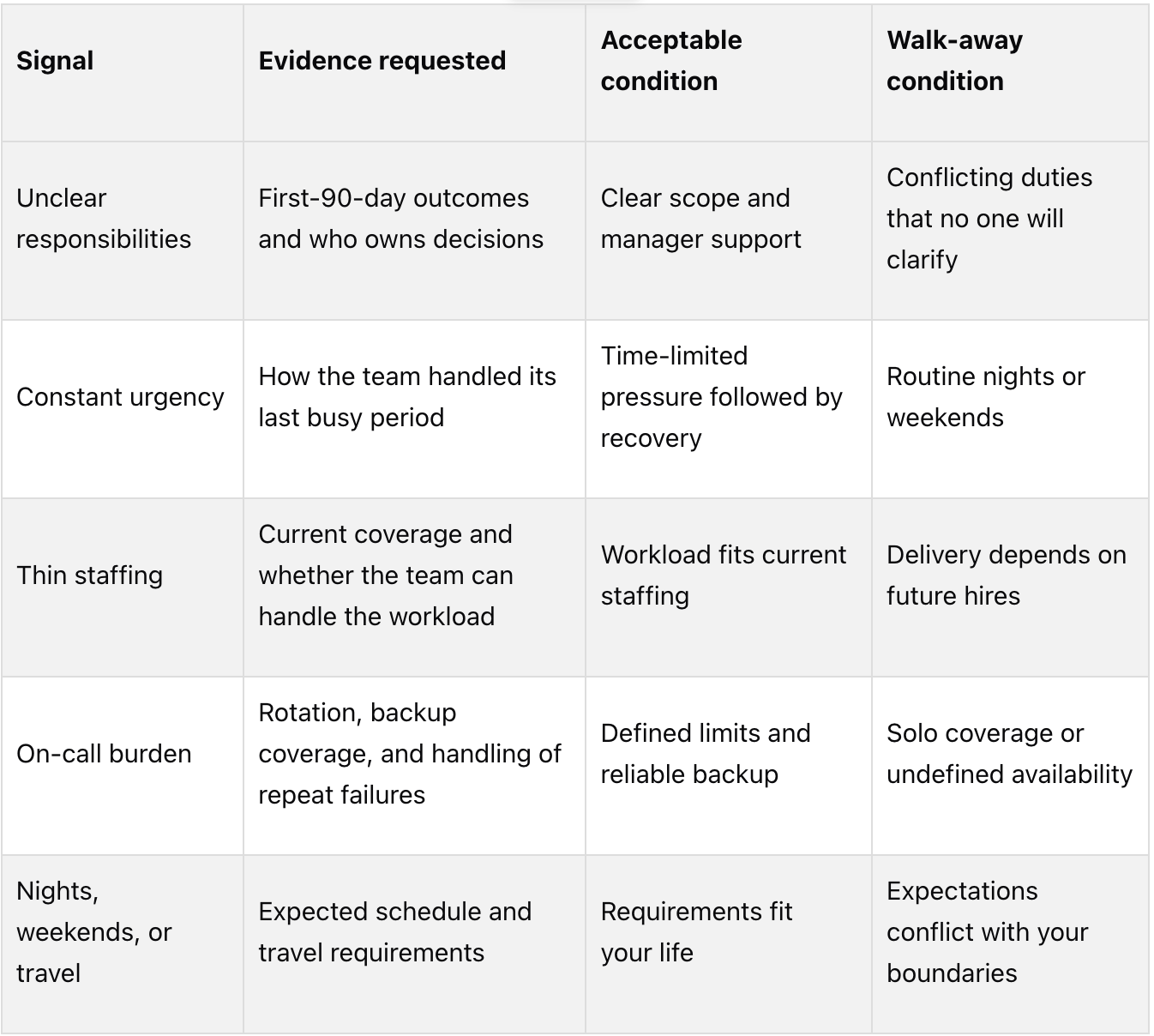
A strong technical match won’t make up for an unstable workload. Ask how a typical week breaks down across planned work, meetings, support, and incidents. Then dig into the team’s last busy period: How did they handle it, and what work had to wait? Check current staffing and whether the team can handle its workload.
For on-call duties, ask who joins the rotation, who provides backup, and how the team deals with repeat failures. Look for automation, documentation, and mentoring that spread knowledge across the team instead of leaving one person responsible [4].
For remote roles, confirm required time-zone overlap and expectations for after-hours messages [3]. Ask about nights, weekends, and travel upfront. Any of these may cross a firm boundary for you [3].
Compare Answers and Set Walk-Away Conditions
Ask the manager and a future teammate the same questions about ownership, priorities, support, and success in the first 90 days. If their answers don’t line up, ask follow-up questions before moving forward. Crunch should have a clear cause and end date - not be the team’s normal way of working [4].
Compare what you hear across interviews to spot gaps before they become your problem.
Conclusion: Confirm the Offer and Keep Your Boundaries
After interviews, check the offer against what the team will actually expect. Accept only if it meets the job criteria you set at the start.
Before signing, get written confirmation of duties, reporting lines, hours, on-call expectations, salary, equity, and termination terms. Compare those details with your interview notes. Don’t sign until any mismatches are resolved in writing.
During your first six months, watch whether the team rewards firefighting or long-term planning, respects your boundaries, and supports work habits people can maintain without burning out [4]. This is your reality check, not the employer’s probation period.
FAQs
How can I show startup-ready skills without startup experience?
Build a portfolio of three to five projects that solve practical problems or include features like authentication and database integration. For each project, briefly explain the problem, constraints, design decisions, and impact. Write in the first person so readers can see exactly what you contributed.
In interviews, explain how you work through uncertainty, define requirements on your own, and describe complex trade-offs in plain English.
How do I discuss workload limits without hurting my chances?
Frame your questions around efficiency, a workload the team can maintain, and long-term project success - not just personal preferences. In interviews, ask how the team handles on-call rotations, staffing levels, and expected working hours.
Explain that avoiding burnout helps you stay focused and deliver high-quality work consistently. This shows a mature, results-focused commitment to the startup’s long-term success.
What if my startup job exceeds the agreed workload?
Assess the workplace over six months. For the first three months, watch what the company rewards: a healthy, steady pace or heroic efforts that push people past their limits. During months four through six, set boundaries and suggest ways to improve how work gets done.
If you face resistance, gaslighting, or a lack of support, take those responses as signs of a toxic workplace that won’t change. Leaving early is the best way to protect your mental health and keep your career moving forward.
Looking to scale more efficiently? Connect with iDelsoft.com! We specialize in developing software and AI products, while helping startups and U.S. businesses hire top remote technical talent — at 70% less than the cost of a full-time U.S. hire. Schedule a call to learn more!
29.10.2026
Keep reading
